When calculating how much money you need to buy an apartment, the purchase price is not the only cost you should take into account.
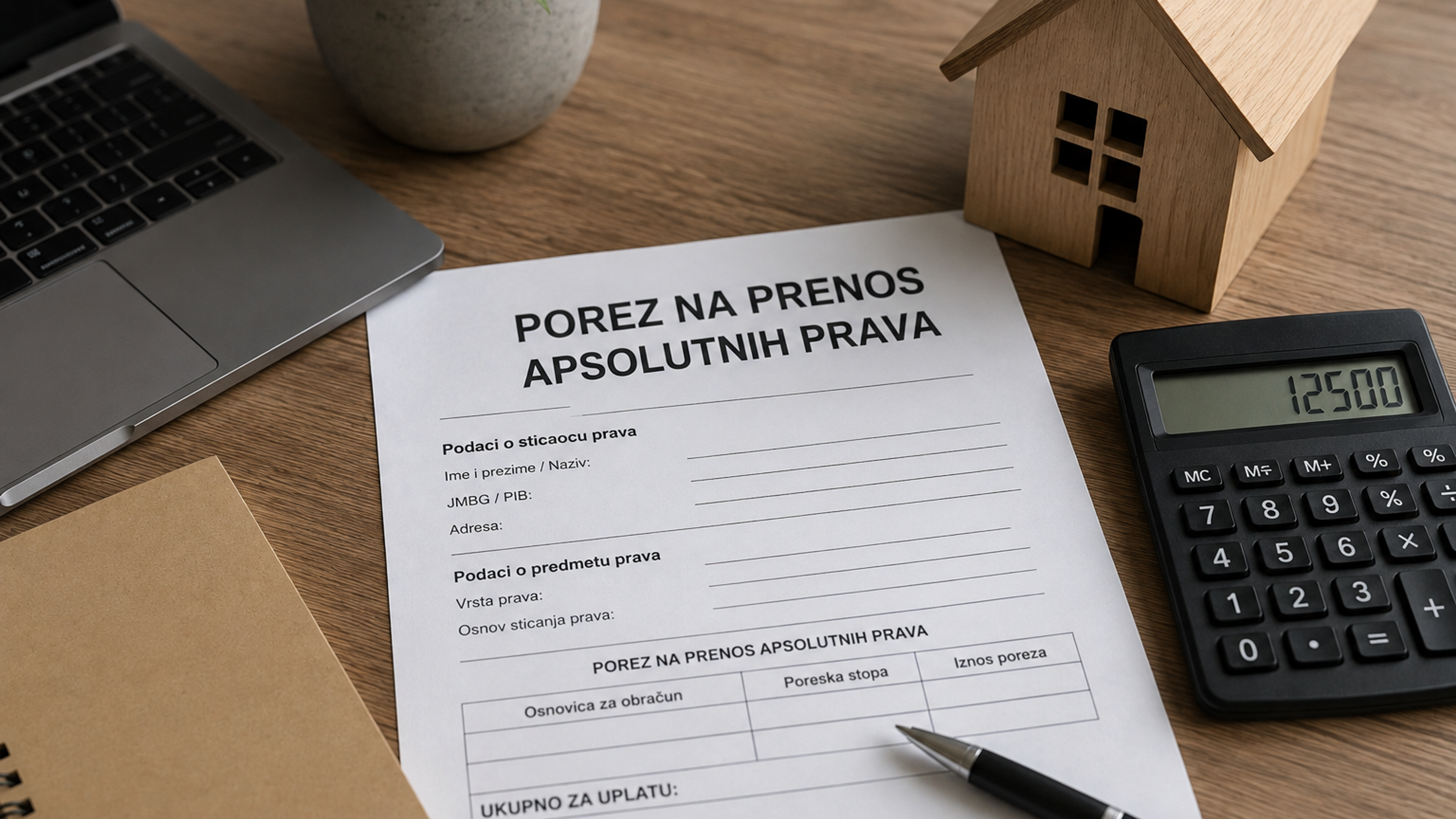
One of the costs that often arises when buying an existing property is the property transfer tax.
The tax rate is 2.5%, but this tax is not payable on every property purchase. It is important to distinguish between buying a property that has already been sold before and buying a new-build property where VAT applies to the first transfer.
When is property transfer tax paid?
In practice, you will most commonly encounter this tax when buying an apartment from a private individual, meaning a property that has already been sold before.
The first transfer of a newly built apartment sold by a developer registered for VAT is subject to a different tax regime. In that case, VAT is included in the purchase price, so property transfer tax is not charged on the same transaction.
That is why it is not enough to simply ask:
“How much tax do I pay when buying an apartment?”
The first step is to determine what type of property you are buying and who you are buying it from.
How much is the tax?
The property transfer tax rate is 2.5%.
If the tax base is, for example, €200,000, then 2.5% corresponds to €5,000.
However, it is important to understand that the tax base is not always automatically the amount stated in the purchase agreement.
The agreed purchase price is used as the tax base if it is not lower than the market value of the property. If the Tax Administration determines that the agreed price is below market value, it may use the estimated market value of the property as the tax base.
In other words, you cannot simply state an artificially low price in the contract and expect the tax to be calculated on that amount.
Who actually pays the tax — the buyer or the seller?
This often causes confusion.
Under Serbian law, in a property sale the taxpayer is the seller.
However, purchase agreements very often state that the buyer will bear the cost of the tax.
That does not change who the taxpayer is in relation to the state. If the buyer agrees in the contract to pay the tax, the buyer effectively assumes responsibility for settling that obligation.
For this reason, before signing the contract it is important to clearly establish what has been agreed between the buyer and seller and which party is responsible for each cost.
Does a first-time homebuyer have to pay this tax?
Not necessarily.
A first-time homebuyer may, subject to the prescribed conditions, qualify for an exemption from property transfer tax.
The exemption applies to up to 40 m² for the buyer.
An additional 15 m² per eligible household member may also qualify for the exemption, provided those family members meet the required conditions.
If the apartment is larger than the exempt area, tax is paid on the corresponding portion that exceeds the exemption.
This means the exemption does not necessarily work on an “all or nothing” basis.
For example, if a person buys a 60 m² apartment and qualifies for the first-home exemption, the first 40 m² may be exempt, while tax is calculated on the value corresponding to the remaining 20 m².
Who qualifies as a first-time homebuyer?
It is not enough to simply not own an apartment at the moment.
To qualify for the first-home exemption, the buyer must meet the legal requirements, including the condition relating to previous ownership of residential property in Serbia.
One of the important criteria is that the buyer must not have owned, co-owned or jointly owned an apartment in Serbia during the legally defined period before the purchase.
This is an important detail.
Even a small previous ownership share in an apartment can be relevant when determining eligibility for the exemption, so these situations should be checked before you include the tax exemption in your financial calculations.
If the exemption is also being claimed for members of the buyer’s household, they must also satisfy the relevant requirements.
How is the exemption obtained?
Today, a large part of the procedure is handled through the public notary.
When a public notary prepares, certifies or confirms the document relating to the transfer of the property, the relevant documentation is electronically forwarded to the competent authorities.
To claim the first-home exemption, the buyer must provide the required statements and documentation proving that the relevant conditions have been met.
The exact documentation depends on the specific situation, which is why it is advisable to address the exemption before the purchase agreement is certified, rather than after the transaction has already been completed.
When is the tax paid?
The tax liability is determined by an official tax decision.
Once the decision is issued, the tax must be paid within the prescribed deadline.
If the purchase agreement states that the buyer is responsible for paying the tax, the buyer should therefore include this amount in the overall purchase budget from the beginning.
When planning the purchase, you should not calculate only the deposit, purchase price and potential mortgage down payment.
You should also account for the additional costs that arise during the transaction.
Property transfer tax and VAT are not the same thing
This is one of the most common sources of confusion when buying property.
When buying an existing apartment, the relevant tax is generally property transfer tax.
When buying a newly built apartment in its first transfer from a developer registered for VAT, the transaction is generally subject to VAT.
A first-time buyer may, under certain conditions, qualify for a refund of part of the VAT when buying a new-build property.
These are two different tax systems and should not be confused.
If you are buying your first apartment, the type of tax benefit available to you depends largely on whether you are buying an existing apartment or a new-build property.
What should you include in your budget before making an offer?
If your total budget is, for example, €200,000, that does not automatically mean you can comfortably buy an apartment listed at exactly €200,000.
In addition to the purchase price, there may be:
- property transfer tax or VAT;
- public notary fees;
- mortgage and banking costs;
- registration and documentation costs;
- agency fees;
- and other expenses depending on the specific transaction.
That is why it is good practice to calculate the total cost of the purchase, not just the advertised price of the apartment.
Conclusion
Property transfer tax becomes much easier to understand when you separate three basic questions:
Does this tax apply to the specific purchase?
What is the tax base?
Does the buyer qualify for an exemption?
The standard rate is 2.5%, but the final cost depends on the specific property, its value and the buyer’s status.
For first-time buyers in particular, it is worth checking eligibility for an exemption before signing the purchase agreement, because it can make a significant difference to the total cost of buying the property.
If you are buying an apartment and want to know in advance what costs, documents and steps you can expect, contact us.
The goal is simple: before you sign anything, you should know exactly what you are buying, how much it will actually cost and what happens next until the keys are in your hands.
Note: This article is for informational purposes only. The tax treatment of a property transaction depends on the specific circumstances, so current requirements should always be checked for the particular property and buyer involved.
Similar stories
New and older properties offer different advantages. The right choice depends on whether you prioritise location, condition, parking or neighbourhood character.
ReadOur StoryThe home that was never listed

First-time buyers of new-build apartments in Serbia may qualify for a refund of part of the VAT paid. Here is who qualifies, how the eligible area is calculated and how the application process works
Read