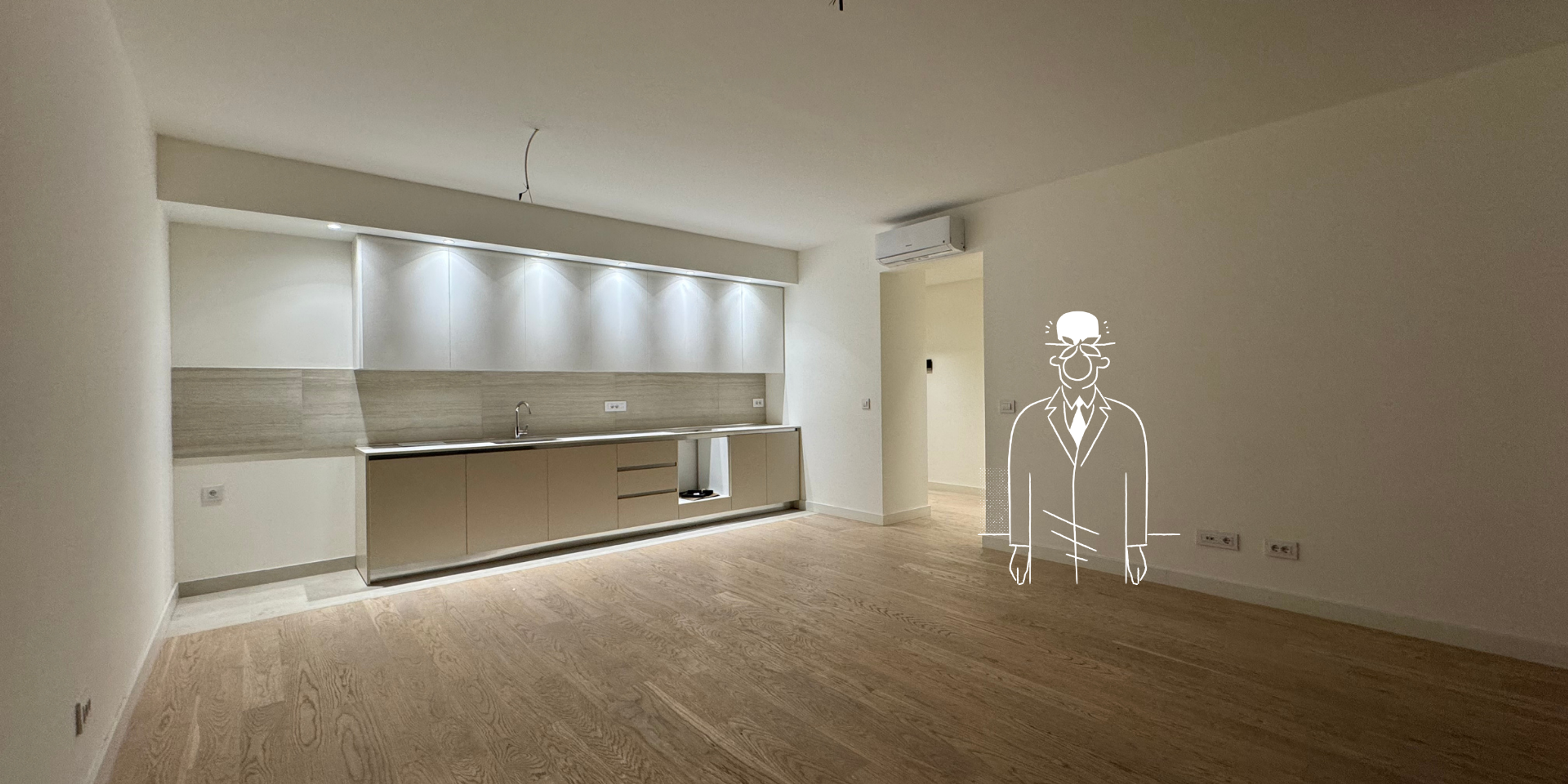
The owner of a one-bedroom apartment in Zemun wanted to rent the property for €800 per month.
The apartment was attractive, well maintained and located in a good building. However, after analysing the supply and demand for comparable properties, I estimated that a realistic monthly rent would be around €700.
The €100 difference did not seem insignificant to the owner.
That was completely understandable — over the course of a year, it represented €1,200 in potential income.
However, when renting a property, the amount of rent is not the only consideration. It is also important to consider how long the apartment may remain vacant while waiting for a tenant willing to pay that price.
We tested the market at €800
The owner wanted to see whether the market might still accept his preferred price.
We listed the apartment at €800 per month.
Over the following three weeks, the listing generated enquiries and viewings. People liked the apartment, the location suited them and they had no significant objections to the property itself.
The problem was their budget.
For most interested tenants, €700 was already the upper limit. They liked the apartment, but simply could not afford to pay €800 each month.
No one signed a lease.
A vacant apartment continues to generate costs
While the apartment remained vacant, all regular expenses continued:
- building and utility charges;
- electricity;
- water;
- maintenance;
- other monthly bills.
The owner had to cover these costs until a tenant moved in.
At the same time, every vacant day represented lost rental income. After three weeks, the missed rent already exceeded €500. Once the ongoing bills were included, the total loss approached €600.
This meant that, while trying to earn an additional €100 per month, the owner lost several times that amount within only a few weeks.
Renting for €100 less is not the most expensive option. Keeping the apartment vacant is.
We adjusted the rent to the realistic level
After three weeks, we reviewed the market response.
The apartment was attracting interest, but not at €800. The problem was not the photographs, location, condition of the property or the quality of prospective tenants.
The issue was the relationship between the asking rent and what the market could afford at that time.
We reduced the monthly rent to €700.
The result came quickly.
The apartment was rented within one week.
The tenants were people who had viewed the property around ten days earlier. They had liked it during their first visit, but the €800 rent was beyond their budget.
Once the price was adjusted to a realistic level, they returned and signed the lease.
A higher rent does not always produce more income
Property owners often focus only on the monthly difference in rent.
However, the more important figures are the total annual income and the amount of time the property is actually occupied.
An apartment rented at €700 for all 12 months generates:
€8,400 per year.
An apartment listed at €800 but left vacant for two months generates no more than:
€8,000 per year, even before accounting for the expenses the owner pays while it is empty.
A higher advertised rent does not therefore guarantee greater earnings.
In some situations, realistic pricing is the financially stronger decision.
Rent valuation should reflect the market
A realistic valuation does not mean renting the property cheaply.
It means identifying a price that reflects:
- the location and micro-location;
- the condition and furnishing of the apartment;
- its size and layout;
- the quality of the building;
- current competing listings;
- the budgets of tenants searching for that type of property.
The goal is to find the right balance between achieving a good rent and securing a suitable tenant within a reasonable period.
The best rent is not the highest figure you can place in a listing. It is the rent that produces stable income without unnecessary vacancy.