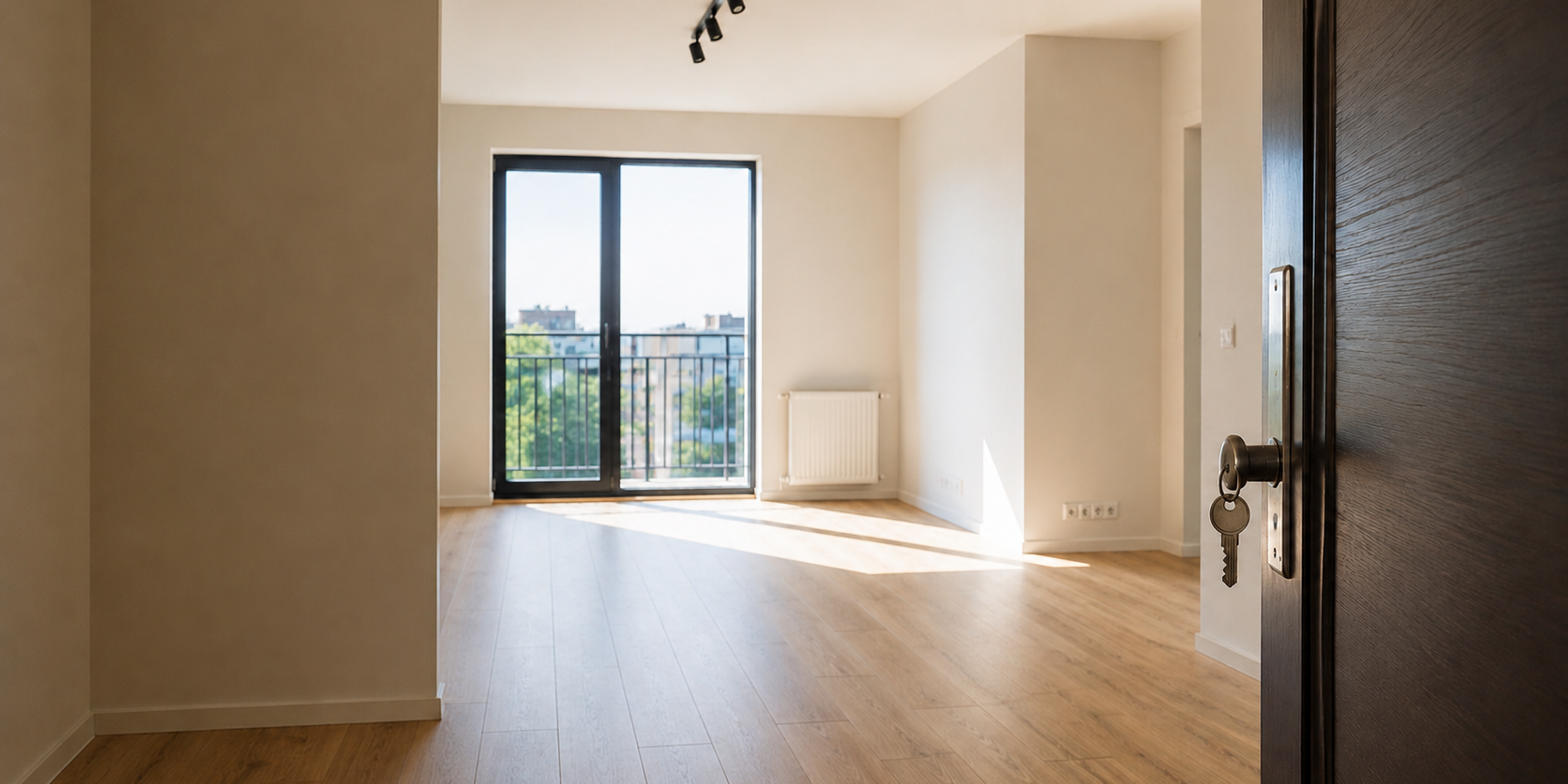
A buyer decides within only a few seconds whether to take a closer look at your property.
Before calling an agent or arranging a viewing, they see the listing title, several photographs, the asking price and a few basic details.
If that information does not clearly communicate what is being offered, they will probably move on to the next property.
In a market where buyers review numerous listings every day, the first impression is not merely an aesthetic detail. It directly affects the number of enquiries, viewings and offers.
The first viewing takes place on a screen
Today, buyers usually “visit” an apartment for the first time through a phone or computer.
Based on the listing, they try to understand:
- how the rooms are arranged;
- how much natural light the property receives;
- its overall condition;
- whether the style and atmosphere suit them;
- what the surrounding area offers;
- whether the property justifies its asking price.
If the photographs do not show the space clearly, the buyer has to imagine what the apartment actually looks like.
When there are enough alternative properties available, most buyers will not spend time guessing.
If buyers cannot understand what they are looking at, they will move on.
Good photography is not merely decorative
Professional photography should not make a property appear to be something it is not.
Its purpose is to show the property’s genuine qualities:
- the proportions of the rooms;
- the layout and connection between spaces;
- the amount of natural light;
- the condition of the interior;
- the view, terrace and other important details.
Dark photographs, tilted angles and excessively wide lenses can create the wrong impression even when the apartment itself is attractive.
The buyer may never reach the stage of seeing it in person.
Video shows how the space works
Photographs show individual rooms, while video helps the buyer understand how the apartment functions as a whole.
A good property video should show a natural route through the space — from the entrance and living area to the bedrooms, terrace and view.
For premium or unusual properties, a virtual tour may also be valuable. It allows buyers to explore the space in greater detail before arranging a viewing, particularly when they do not live in Belgrade or are purchasing the property as an investment.
The goal is not to produce as much content as possible, but to select the format that presents the individual property most effectively.
The description should answer the right questions
A property description should not consist only of general phrases such as “luxurious”, “fantastic” or “in an excellent location”.
Buyers need specific information.
A strong description should clearly explain:
- who the property is best suited for;
- how the space is organised;
- its main advantages;
- its condition and what is included;
- the parking, transport and local infrastructure;
- any important legal or technical details.
When the information is clear, buyers can assess whether the property meets their needs before making contact.
The goal is not to attract everyone
A large number of enquiries does not automatically mean that the listing is effective.
When the presentation is unclear, the property may attract people seeking a different layout, working with a significantly lower budget or discovering only during the viewing that the location and space do not suit them.
This wastes both the owner’s and the buyer’s time.
A well-prepared listing filters interest before the first conversation. It does not attempt to attract everyone, but rather the people for whom that particular property may genuinely be suitable.
When a listing is prepared properly, not everyone comes to view it — the right buyers do.
Presentation is part of the sales strategy
A good property does not automatically achieve a strong result simply because it has been published on a property portal.
The price must be set correctly, the target buyer must be understood and the apartment must be presented in a way that makes its advantages clear from the first interaction.
Photography, video, virtual tours and the property description are not separate decorative elements.
Together, they create the property’s first impression — and that first impression often determines whether a buyer arranges a viewing or opens the next listing.